
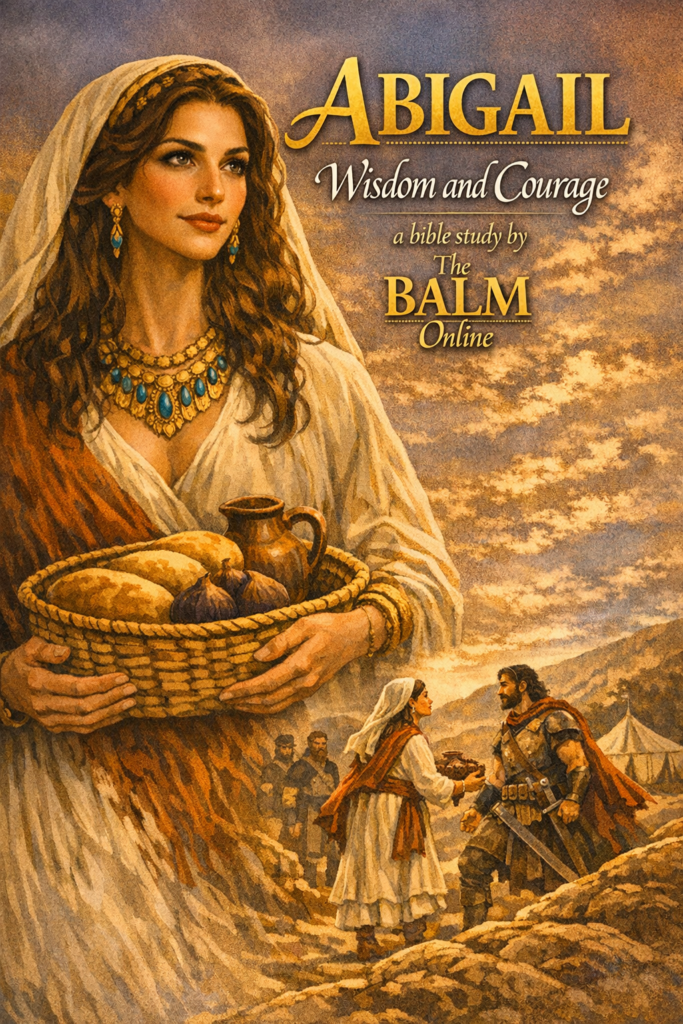
Abigail
wisdom and Courage
Scripture Focus: 1 Samuel 25; 2 Samuel 2–3
Her World
Abigail lived during a turbulent period in Israel’s history—before David became king, when tribal tensions, political uncertainty, and violent conflicts were part of daily life. Women often had little control over their circumstances, yet Abigail emerges as one of Scripture’s most compelling examples of courage, discernment, and spiritual clarity
Her Marriage to Nabal
The Bible describes Nabal as harsh and evil in his dealings (1 Samuel 25:3). Abigail, by contrast, is introduced as intelligent and beautiful. This contrast is intentional: she is a woman of character living under the authority of a man who lacked it. Nabal’s wealth was enormous—thousands of sheep and goats—yet his heart was small. When David’s men approached him for provisions after protecting his shepherds, Nabal responded with insults and arrogance. His foolishness ignited a crisis that could have ended in bloodshed
Abigail Steps Into the Fire
When Abigail heard what her husband had done, she understood the danger instantly. David, enraged, was marching toward Nabal’s household with armed men. Abigail had no time to debate, complain, or collapse under the weight of her circumstances. She acted. She gathered food, loaded donkeys, and rode out to intercept David—alone, unarmed, and uninvited. Abigail didn’t wait for permission. She didn’t wait for ideal conditions. She didn’t wait for someone else to fix the problem. She was scared, but did not let the fear stop her. She stepped into the gap
Her Encounter With David
When Abigail met David, she dismounted and bowed—an act of humility, not weakness. She spoke with clarity, wisdom, and spiritual insight. She reminded David of God’s promises, appealed to his conscience, and redirected him away from vengeance. David’s response: he blessed her for her discernment and acknowledged that she kept him from shedding blood (1 Samuel 25:32–34).
Abigail saved lives that day—including David’s integrity.
After Nabal’s Death
When Nabal later died—struck down by the Lord—David sent for Abigail and asked her to become his wife (1 Samuel 25:39–42). She accepted, stepping into a new season of influence and responsibility. She later bore David a son, Chileab (also called Daniel), mentioned in 2 Samuel 3:3. Though Scripture doesn’t detail her later life, her legacy is clear: she was a woman whose wisdom shaped the future king of Israel and protected her household in a moment of crisis.
Abigail Teaches Us
Abigail’s story is not just a historical account—it is a blueprint for godly womanhood in a complicated world. She shows that a woman anchored in wisdom can influence kings, calm storms, and protect her household. Her life whispers to every woman today:
“You are stronger than you think, wiser than you realize, and seen by God even when others overlook you.”
1. Wisdom Is a Form of Strength
Abigail’s wisdom wasn’t passive—it was active, strategic, and courageous. She teaches that wisdom is not simply knowing what is right but doing what is right even when it’s costly. Women today often face chaotic situations—family conflict, workplace tension, relational strain. Abigail shows that wisdom can de‑escalate, redirect, and protect. It is not weakness; it is power under God’s guidance.
2. You Can Be Righteous Even in Unrighteous Environments
Abigail didn’t become bitter because of Nabal’s character. She didn’t mirror his foolishness. She didn’t let her circumstances define her spirit. You may not control the behavior of others—spouses, coworkers, family—but you can control your response. Your character can remain intact even when surrounded by dysfunction.
3. God Sees You, Even When Others Don’t
Abigail lived with a man who didn’t value her, yet God did. He saw her integrity. He honored her courage. He elevated her at the right time. Women who feel unseen—overlooked in marriage, ministry, or career—can find comfort in Abigail’s story. God sees every act of faithfulness and knows how to honor it in His timing.
4. Peacemaking Is Holy Work
Abigail didn’t just avoid conflict—she transformed it. She stepped between anger and destruction and brought peace. Peacemaking today might look like initiating hard conversations, offering forgiveness, setting boundaries, or speaking truth with grace. It is not about being a doormat; it’s about being a bridge.
5. Your Voice Matters
Abigail spoke boldly to a future king—and he listened. Her words changed the trajectory of a nation. Women today must not underestimate the power of their voice—whether in their home, workplace, church, or community. God uses women who speak with courage and conviction.
Conclusion: Rise Like Abigail
Abigail’s story is not just a story —it’s a mirror for every woman who has ever faced chaos and chosen courage. She lived in a world that tried to silence her, yet she spoke wisdom that changed the course of a king’s heart. She stood between anger and destruction, and God stood with her. When you read 1 Samuel 25, don’t just see a woman from the past—see a reflection of what God can do through you today. Abigail didn’t wait for someone else to rescue her; she rose, acted, and trusted that God would meet her in the middle of the storm. And He did. You are not a victim of your circumstances. You are a vessel of God’s strength. The same God who empowered Abigail to bring peace and protection will empower you to rise above fear, speak truth with grace, and walk boldly in wisdom. Let her story remind you: When you move in faith, God moves with you. When you rise, heaven rises to meet you. So, open your Bible, read Abigail’s story, and let her courage ignite your own. Because the world still needs women who rise—not in pride, but in purpose.
I loved it! Thank you for this. I will be reading 1 Samuel today.♥️