
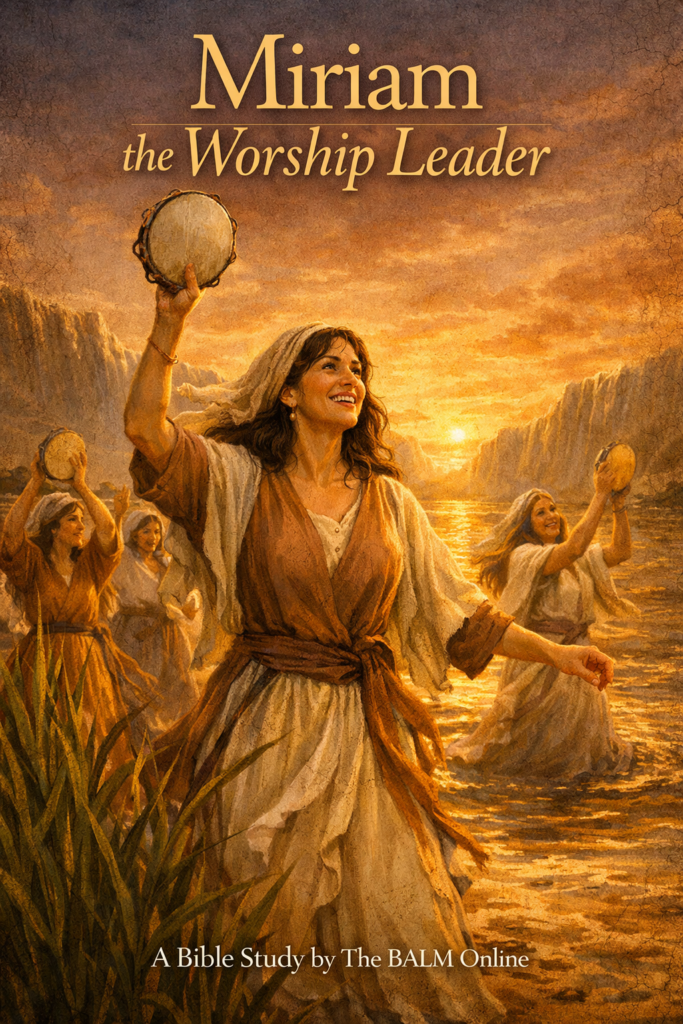
Miriam
The Worship Leader
Exodus 15
The Red Sea had just swallowed Egypt’s army. The air was thick with salt and victory. The people of Israel stood on the far shore, trembling — not from fear, but from awe. Behind them lay slavery, chains, and cruelty. Before them stretched freedom, promise, and the unknown.
And then, in the midst of the stunned silence, a sound rose — the sound of Miriam’s tambourine.
She was no longer the little girl hiding in the reeds. She was a woman now — a prophetess, a leader, a voice of celebration. Her hands, once used to guard a basket, now beat out a rhythm of deliverance.
Miriam lifted her tambourine high, and the women followed her. They danced. They sang. They rejoiced. Their feet struck the sand that had just been the path of miracles.
“Sing to the Lord,” Miriam cried, “for He has triumphed gloriously; the horse and his rider He has thrown into the sea!”
The women’s voices joined hers, echoing across the desert. Their song was not rehearsed — it was born from relief, gratitude, and wonder. Every beat of the tambourine was a declaration: God has done it.
Miriam’s worship was not quiet or polished. It was wild, free, and holy. It was the sound of chains breaking and hearts awakening. It was the sound of a people remembering who their God was.
She led the women in praise, not because she was perfect, but because she was present — present to the miracle, present to the moment, present to the God who had kept His promise.
Years later, Miriam would face challenges, pride, and correction. But on that day by the sea, she was pure joy — the first worship leader of Israel, the woman whose song became the soundtrack of freedom.
✨ What We Learn from Miriam the Worship Leader
Miriam’s story teaches us that worship is not just music — it’s memory. It’s how we remember what God has done and declare who He is.
Here’s what her story reveals:
1. Worship is a response to deliverance.
Miriam didn’t wait for a temple or a choir. She worshiped right where God moved. When God brings you through something, don’t wait — praise Him immediately.
2. Worship leads others into freedom.
Her song invited the women to dance. Your worship can awaken courage in others. When you praise openly, you give others permission to celebrate too.
3. Worship is prophetic.
Miriam’s song wasn’t just about the past — it declared the future. True worship speaks life, victory, and promise into what’s ahead.
4. Worship is embodied.
She didn’t just sing — she danced. She moved. She celebrated with her whole being. God delights in worship that involves heart, voice, and body.
5. Worship reminds us who God is.
In every battle, every storm, every victory — worship anchors us in truth. It reminds us that the same God who parted the sea still reigns today.
🔥 Conclusion
Pick up your tambourine — whatever that looks like for you. Your voice, your art, your prayer, your testimony — let it become your song. Celebrate what God has done. Lead others into praise. Dance in the freedom He’s given you.
Like Miriam, let your worship echo across generations. Let your song remind the world that
God still delivers.